Introduction
Forgetting a name or misplacing your keys now and then is a normal part of getting older. But when memory loss, confusion or changes in thinking start to affect daily life, it can be frightening for the person experiencing it and worrying for the people who love them.
Conditions such as dementia, Alzheimer’s disease and other neurological disorders affect how a person remembers, thinks, communicates and manages everyday tasks. While there is often no cure, the right support can make a real difference to how well someone lives with these changes.
That is the purpose of cognitive care. In this article, we explain what cognitive care involves, how it supports seniors living with memory loss, the signs a loved one may need cognitive support, and how Curantis Home Nursing provides patient, compassionate cognitive care in the comfort of home.
What Is Cognitive Care?
Cognitive care is specialised support for people living with cognitive impairment caused by conditions such as dementia, Alzheimer’s disease, Parkinson’s disease, stroke or other neurological disorders. Its goal is to support mental health, help the person stay as independent as possible and improve their quality of life.
A trained caregiver adapts each day to the person’s abilities, mood and needs. Cognitive care can include:
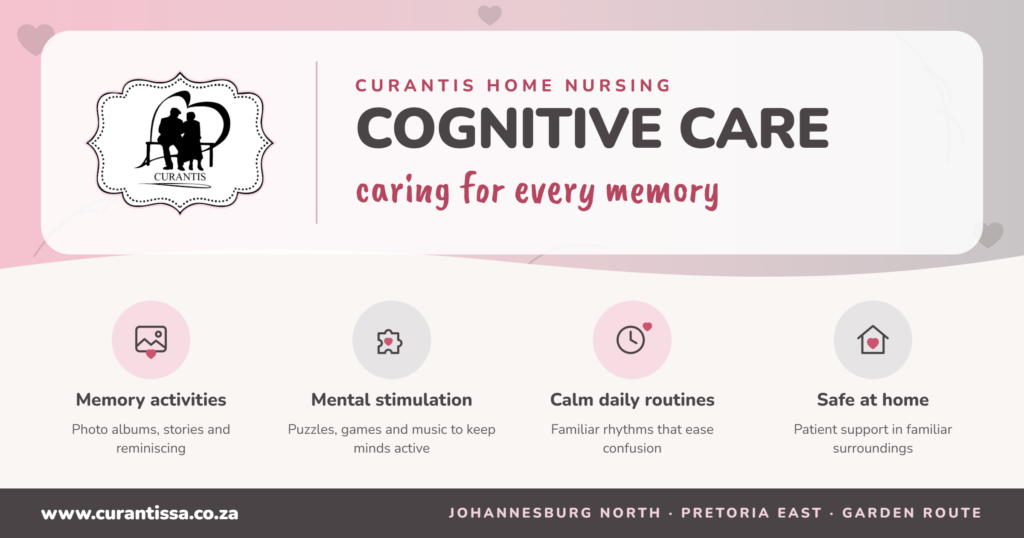
- Mental stimulation exercises: puzzles, word games, card games, sorting activities and simple quizzes that keep the brain active
- Memory activities: looking through photo albums, talking about familiar places and people, and reminiscing about earlier life
- Music and creative activities: listening to favourite songs, singing, drawing or simple crafts
- Structured daily routines: regular times for meals, activities, rest and sleep to reduce confusion and anxiety
- Gentle reminders and prompts: for meals, hydration, medication and personal care
- Calm communication techniques: short, clear sentences, patience and reassurance, especially during moments of confusion or agitation
- A safe home environment: reducing clutter, labelling cupboards and doors, and watching for wandering or other risks
Cognitive Care vs. General Caregiving
General caregiving focuses on daily tasks. Cognitive care adds an understanding of how memory loss affects behaviour, communication and emotions. Caregivers trained in dementia care know how to respond to repeated questions, confusion, sundowning or frustration with patience and kindness.
Benefits of Cognitive Care at Home
Keeping the Mind Active
Regular mental stimulation keeps the brain engaged. While it cannot cure dementia, staying mentally and socially active may help people maintain their abilities for longer and enjoy their days more.
Less Confusion and Anxiety
Familiar surroundings, a predictable routine and a patient caregiver help reduce confusion, restlessness and agitation. Many people living with dementia feel calmer at home than in an unfamiliar facility.
Staying Independent for Longer
Cognitive care focuses on what the person can still do, not what they have lost. Caregivers encourage them to take part in everyday tasks like dressing, setting the table or watering plants, which supports confidence and independence.
Better Mood and Emotional Wellbeing
Memory loss can bring frustration, low mood and loneliness. Meaningful activities, music, conversation and companionship help lift mood and give the day purpose.
Safety at Home
A caregiver who understands cognitive changes can spot risks such as wandering, forgotten stove plates, missed medication or unsafe walkways, and help prevent accidents before they happen.
Support and Peace of Mind for Families
Caring for a loved one with dementia is emotionally and physically demanding. Professional cognitive care gives families a trusted partner, time to rest, and reassurance that their loved one is safe and well cared for.
Signs Your Loved One May Need Cognitive Support
Everyone forgets things sometimes. These signs may suggest that memory or thinking changes are starting to affect daily life:
- Forgetting recent conversations or asking the same question repeatedly
- Getting lost in familiar places or confused about the time or day
- Struggling to follow a conversation, find words or follow instructions
- Difficulty with tasks they used to manage, such as cooking, paying bills or taking medication
- Leaving the stove on, doors unlocked or taps running
- Changes in mood or personality, such as anxiety, suspicion, irritability or withdrawal
- Neglecting personal hygiene, meals or the home
- Wandering, especially in the late afternoon or at night
If you notice these changes, the first step is to see a doctor for a proper assessment, as some causes of memory problems are treatable. Once there is a diagnosis, cognitive care at home can help your loved one live as well and as safely as possible.
Cognitive Care as Part of Complete Home Care
At Curantis Home Nursing, we understand that dementia care needs patience, love and dedication. Our caregivers have experience supporting people living with dementia and Alzheimer’s at home, and they adapt their approach to each person’s abilities, history and personality.
Cognitive care can be combined with our other caregiving services, including:
We work closely with families and, where needed, with the person’s doctor, so care stays consistent as needs change. Curantis provides care in Johannesburg North, Pretoria East and the Garden Route.
Tips for Families Supporting a Loved One with Memory Loss
- Keep a steady routine. Regular times for meals, activities and sleep help reduce confusion.
- Speak simply and calmly. Use short sentences, one question at a time, and give them time to answer.
- Avoid arguing or correcting. If they are confused, gently reassure and redirect rather than insisting on the facts.
- Use memory aids. Calendars, labelled cupboards, a clock with the day and date, and photos of family can all help.
- Focus on what they enjoy. Favourite music, old photos and familiar hobbies often bring comfort and connection.
- Make the home safer. Clear walkways, add night lights and consider safety locks or stove guards if needed.
- Look after yourself. Caring for someone with dementia is demanding. Accepting help early protects your own health and keeps care sustainable.
Conclusion
Cognitive changes are a difficult journey, but no family has to face them alone. With patient, specialised cognitive care, people living with dementia, Alzheimer’s and other neurological conditions can stay mentally engaged, feel calmer and safer, and keep their independence and dignity in the comfort of their own home.
If you found this article useful, feel free to read some of our other articles, such as Companionship for the Elderly: Why Connection Matters at Home.
Before following any advice or guide, it’s essential to consult your doctor or healthcare provider. They can provide personalised health recommendations tailored to your specific needs and health conditions.
Would you like guidance on addressing any of these challenges? Please contact Curantis today for help. Contact Gary on 079 511 0100 or contact us from our website, www.curantissa.co.za.
FAQs
What is cognitive care?
Cognitive care is specialised support for people with memory loss or thinking difficulties caused by conditions such as dementia, Alzheimer’s disease or stroke. It includes mental stimulation, memory activities, structured routines and a safe home environment.
Can cognitive care slow down dementia?
Cognitive care cannot cure dementia. Keeping the mind active, following a routine and staying socially engaged may help people maintain their abilities for longer and improve their quality of life. A doctor can advise on medical treatment.
Is cognitive care only for people with Alzheimer’s?
No. It also supports people with other types of dementia, Parkinson’s disease, the effects of a stroke and other neurological conditions that affect memory and thinking.
Can someone with dementia stay at home safely?
In many cases, yes. With the right support, routines and safety measures, many people living with dementia can stay at home for longer. As needs grow, care can increase to daily or full-time support.
Where does Curantis offer cognitive care?
Curantis Home Nursing provides cognitive care and other caregiving services in Johannesburg North, Pretoria East and the Garden Route.
If you found this article useful, feel free to read some of our other articles, such as Companionship for the Elderly: Why Connection Matters at Home.
Before following any advice or guide, it’s essential to consult your doctor or healthcare provider. They can provide personalised health recommendations tailored to your specific needs and health conditions.
Would you like guidance on addressing any of these challenges? Please contact Curantis today for help. Contact Gary on 079 511 0100 or contact us from our website, www.curantissa.co.za.