Introduction
The aging process brings about various changes in the body, one of which is the reduction in effective blood circulation. For seniors, maintaining optimal blood flow is crucial for overall health and well-being. This article delves into the importance of light exercise for seniors as a means to enhance circulation in older adults. It will cover what constitutes light exercise, its specific benefits for circulation, recommended activities, strategies for starting a routine, and overcoming barriers to engaging in physical activity.
Understanding Circulation in Seniors
As we age, the circulatory system may become less efficient due to factors such as arterial stiffness, decreased cardiac output, and the presence of chronic conditions. These changes can lead to reduced blood flow to vital organs and tissues, resulting in symptoms like fatigue, dizziness, and an increased risk of cardiovascular diseases. Understanding how circulation functions and the common challenges faced by seniors is essential for addressing their unique health needs.
The Importance of Blood Flow
Blood circulation is critical in supplying oxygen and nutrients to cells while removing waste products. In seniors, poor circulation can exacerbate existing health issues, including high blood pressure, diabetes, and arthritis. Enhanced circulation not only helps to improve physical health but also has a significant impact on mental well-being, energy levels, and overall quality of life. Light exercise serves as an effective and safe intervention for improving blood flow, thereby addressing many of the challenges associated with aging.
What is Light Exercise for Seniors?
Light exercise refers to physical activities that are low in intensity and easy to perform, making them suitable for individuals with varying fitness levels. Unlike vigorous exercises, light activities do not cause excessive strain on the body, allowing seniors to engage without the risk of injury. Such activities can be integrated into daily routines, promoting a more active lifestyle.
Definition and Types of Light Exercise
Light exercise can be defined as any physical activity that raises the heart rate slightly and can be sustained comfortably over time. Common categories of light exercise include walking, stretching, and gentle forms of yoga. Importantly, these activities can be adapted to fit individual abilities, ensuring that seniors can participate regardless of their fitness levels.
Examples of Light Exercise Activities
- Walking at a comfortable pace
- Gentle stretching exercises
- Chair exercises
- Water aerobics
- Tai Chi
Benefits of Light Exercise for Circulation
Engaging in light exercise offers numerous health benefits, particularly in improving circulation and overall cardiovascular health. These benefits are crucial for seniors, who may face a higher risk of circulatory problems due to age-related changes.
Enhanced Blood Flow
Light exercise promotes vasodilation, the widening of blood vessels, leading to increased blood flow. This enhanced circulation helps deliver vital nutrients and oxygen to tissues, which is essential for maintaining health and vitality in seniors. Activities like walking or stretching can significantly improve blood flow to the lower limbs, reducing the risk of conditions such as deep vein thrombosis.
Improved Cardiovascular Health
Regular participation in light exercise strengthens the heart muscle and improves its efficiency. This results in better cardiac output and lower blood pressure, minimizing the risk of heart disease and stroke. Light exercise can also help regulate cholesterol levels, further contributing to cardiovascular health.
Increased Mobility and Flexibility
As seniors engage in light exercise, they naturally enhance their joint mobility and flexibility. This is particularly important for maintaining independence and functionality in daily activities. Improved flexibility not only aids in physical movements but also reduces the risk of falls, a significant concern for older adults.
Reduction in Health Risks
Light exercise is associated with a range of health benefits that can help reduce the risk of chronic diseases. It can assist in managing conditions such as diabetes, obesity, and hypertension, all of which can compromise circulation. By incorporating light exercise into their routines, seniors can mitigate these risks and enhance their overall health.
Boosted Mental Well-being
Physical activity has profound effects on mental health. Light exercise can elevate mood, reduce symptoms of anxiety and depression, and enhance cognitive function. Improved circulation to the brain is associated with better mental clarity and memory, making light exercise a valuable tool for mental wellness in seniors.
Recommended Light Exercises for Seniors
When considering light exercise, it’s essential to select activities that not only promote circulation but also align with individual preferences and capabilities. Here are some effective and enjoyable exercises for seniors.
Walking
Walking is one of the simplest and most accessible forms of light exercise. It can be done virtually anywhere and requires no special equipment. Seniors can tailor their walking routines to fit their comfort levels, starting with short distances and gradually increasing duration and pace as fitness improves.
Stretching
Incorporating gentle stretching into daily routines enhances flexibility and reduces muscle tension. Stretching exercises can be performed at home and provide immediate relief from stiffness while promoting better circulation. Focus on major muscle groups and hold stretches for 15 to 30 seconds for optimal results.
Gentle Yoga
Yoga is an excellent option for seniors, emphasizing gentle movements and breath control. Classes tailored for seniors often focus on seated or supported poses that improve balance, flexibility, and circulation. Additionally, yoga encourages mindfulness and relaxation, fostering overall well-being.
Chair Exercises
Chair exercises are particularly beneficial for seniors with mobility challenges. These exercises can be performed while seated, ensuring safety while still promoting movement. Activities such as arm raises, leg lifts, and seated marches help improve circulation and maintain muscle strength.
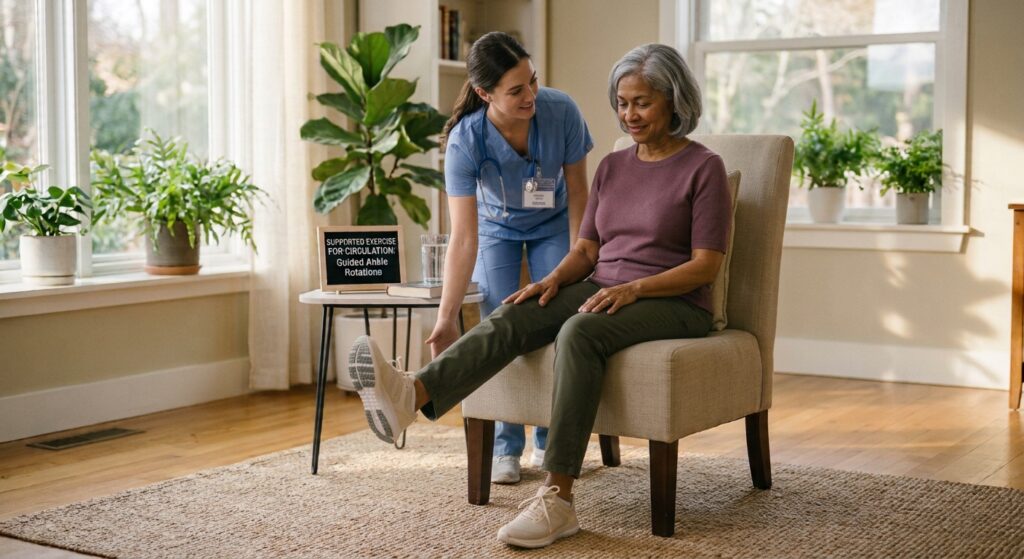
Leg Exercises for Circulation
The legs are often the first place seniors notice poor circulation, as swelling, cold feet or heaviness after sitting. These simple seated exercises get blood moving again and can be done several times a day:
- Ankle pumps: Sitting upright, point your toes away from you, then pull them back toward you. Repeat 10–15 times on each foot.
- Ankle rotations: Lift one foot slightly and slowly circle the ankle 10 times clockwise, then 10 times anticlockwise. Switch feet.
- Seated leg lifts: Straighten one leg out in front of you, hold for 3–5 seconds, then lower it gently. Repeat 8–10 times per leg.
- Seated marches: Lift your knees one at a time as if marching on the spot, for 30 seconds to a minute.
For seniors with limited mobility or balance concerns, having a caregiver or nurse nearby makes these exercises safer and easier to keep up with.
How to Start a Light Exercise Routine
Beginning a light exercise routine can be a rewarding journey toward better health. However, it’s essential to approach this process thoughtfully to ensure safety and effectiveness.
Consulting with Healthcare Professionals
Before starting any new exercise program, seniors should consult with their healthcare providers. This step is crucial, especially for individuals with pre-existing medical conditions or those who have been inactive. Healthcare professionals can provide tailored advice and may recommend specific exercises suited to individual health needs.
Setting Realistic Goals
Setting achievable and realistic goals is vital for maintaining motivation and ensuring success. Seniors should start with small, manageable goals, such as walking for 10 minutes a day and gradually increasing the duration or intensity. Tracking progress can provide a sense of accomplishment and encourage ongoing commitment to the routine.
Creating a Safe Exercise Environment
Safety is paramount when engaging in physical activity. Seniors should exercise in well-lit, clutter-free spaces to minimize the risk of falls. Comfortable clothing and supportive footwear should be worn to enhance mobility. Additionally, having a friend or family member to accompany them during exercises can provide not only safety but also social support.
Overcoming Barriers to Exercise
While the benefits of light exercise are evident, many seniors encounter barriers that may prevent them from engaging in physical activity. Addressing these challenges is essential for fostering a consistent exercise routine.
Addressing Mobility Challenges
Mobility limitations can be a significant barrier for seniors. It’s important to choose exercises that accommodate these limitations. Low-impact activities such as swimming or stationary cycling can be excellent alternatives that provide cardiovascular benefits without excessive strain on joints.
Finding Motivation
Motivation can often wane, particularly when results are not immediately visible. To combat this, seniors can join exercise groups or classes, which provide both social interaction and encouragement. Setting up a regular schedule and incorporating enjoyable activities can make exercising feel less like a chore and more like a pleasurable part of the day.
Incorporating Social Aspects
Exercising alone can sometimes lead to feelings of isolation. Incorporating social aspects can significantly improve motivation and enjoyment. Group classes, walking clubs, or even inviting friends for a walking session can make light exercise a more engaging activity, fostering connections and enhancing emotional well-being.
Conclusion
In summary, light exercise plays a vital role in enhancing circulation among seniors, providing an array of health benefits that contribute to improved quality of life. From walking and stretching to engaging in gentle yoga, these activities can be tailored to fit individual needs and capabilities. Starting a light exercise routine may require some planning and overcoming barriers, but the rewards—better health, increased mobility, and enhanced mental well-being—are well worth the effort.
“Not sure which exercises are safe for your loved one? Curantis Home Nursing caregivers can guide gentle, supervised movement at home across Gauteng and the Garden Route. Contact us.”
FAQs
How often should seniors engage in light exercise?
Aim for some light activity on most days of the week. Even 10–15 minutes of walking or seated exercises at a time helps circulation. Over time, seniors can build toward the general guideline of 150 minutes of moderate activity per week, with their doctor’s approval.
Can light exercise help with arthritis?
Yes, light exercise can help improve joint flexibility and reduce stiffness associated with arthritis. Activities like swimming, walking, and gentle stretching are particularly beneficial.
Is walking sufficient for improving circulation?
Absolutely. Walking is an excellent way to enhance circulation and can easily be incorporated into daily routines. It is low-impact and adaptable to individual fitness levels.
What should seniors do if they experience pain while exercising?
If seniors experience pain during exercise, they should stop immediately and assess the situation. Consulting with a healthcare professional is advisable to identify any underlying issues and modify their exercise program accordingly.
Are there specific exercises for improving circulation in the legs?
Yes, exercises such as ankle pumps, leg lifts, and seated marches can significantly improve circulation in the legs. Additionally, regular walking is beneficial for overall leg health.