When someone you love is living with a serious illness, every day matters. Alongside medical treatment, what often matters most is that they feel comfortable, at peace and surrounded by the people and places they love.
That is the heart of palliative care. It is specialised, comfort-focused care for people with serious or life-limiting illnesses, such as cancer, heart failure, advanced lung or kidney disease, dementia or neurological conditions. It focuses on relieving pain and symptoms, easing distress and supporting the whole family.
In this article, we explain what palliative care involves, how it differs from hospice care, the benefits of receiving it at home, and how Curantis Home Nursing provides gentle, dignified palliative support for patients and their families.
What Is Palliative Care?
Palliative care is a holistic approach that looks after the whole person: their physical, emotional, social and spiritual needs. It can be provided at any stage of a serious illness, alongside curative treatment or as the main focus of care, depending on the person’s needs and wishes.
Palliative care at home can include:
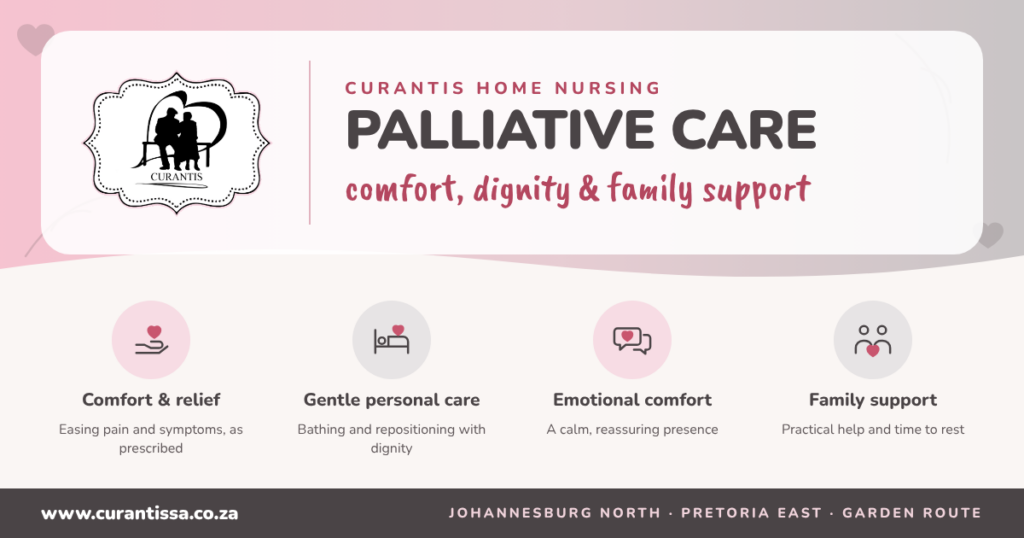
- Pain and symptom relief: helping manage pain, breathlessness, nausea, fatigue and poor appetite, as prescribed by the doctor
- Medication support: giving prescribed medication on time and monitoring vital signs
- Personal care: gentle help with bathing, mouth care, repositioning and pressure care to keep the person clean and comfortable
- Nutrition and hydration support: small, appealing meals and fluids suited to how the person is feeling
- Emotional comfort: a calm, reassuring presence, conversation and companionship
- Family support: guidance, practical help and time to rest for loved ones
- Working with the medical team: sharing observations with the doctor so care can be adjusted as needs change
Palliative Care vs. Hospice Care
The two are often confused. Palliative care can begin at diagnosis and continue alongside treatment for as long as it is needed. Hospice care is a form of palliative care for the final stage of life, when curative treatment has stopped. Both share the same goal: comfort, dignity and quality of life.
If you found this article useful, feel free to read some of our other articles, such as Cognitive Care at Home: Supporting Seniors with Dementia and Memory Loss.
Benefits of Palliative Care at Home
Comfort in Familiar Surroundings
Many people with a serious illness would rather be at home than in hospital. Their own bed, their belongings, their garden and their pets can bring a deep sense of peace and security.
Better Control of Pain and Symptoms
With regular monitoring and prescribed medication given on time, pain and other symptoms can be managed more consistently, helping the person rest and feel more like themselves.
Dignity and Personal Choice
Palliative care respects the person’s wishes about their care, routines and daily life. Gentle, respectful personal care helps them keep their dignity, even as their needs grow.
Emotional and Spiritual Support
A serious illness brings fear, sadness and uncertainty. A caring presence, time to talk and space for faith, memories and family moments all support emotional wellbeing.
More Quality Time Together
When professional caregivers take on the hands-on care, families can spend more time simply being together, rather than carrying every task on their own.
Support for the Whole Family
Palliative care also cares for the people around the patient. It offers reassurance, practical help and the chance for family members to rest and look after themselves.
When to Consider Palliative Care
Palliative care is not only for the last days of life. It may help when a loved one:
- Has been diagnosed with a serious or life-limiting illness
- Experiences ongoing pain, breathlessness, nausea or fatigue
- Has frequent hospital visits or admissions
- Is finding it harder to manage daily tasks like bathing, eating or moving around
- Has decided to stop curative treatment and focus on comfort
- Wants to remain at home for as long as possible
- Has a family who are feeling exhausted or overwhelmed by caring
The person’s doctor is the best place to start. They can explain the options, adjust medication and help plan the right level of support at home.
Palliative Care at Curantis Home Nursing
At Curantis Home Nursing, our palliative care focuses on comfort, dignity and quality of life for patients with serious illnesses, and on supporting the families who love them. We work alongside the patient’s doctor and follow their care plan, so every part of care stays consistent and safe.
Palliative care can be combined with our other caregiving services, including:
- Personal care assistance with bathing, grooming and repositioning
- Medication support and vital signs monitoring
- Meal preparation and assisted feeding
- Wound care, catheter care and stoma management by our wound care nurse
- Companionship and cognitive care
- Light housekeeping so the home stays calm and comfortable
Care can be arranged for a few hours a day or as full-time support, and can change as your loved one’s needs change. Curantis provides care in Johannesburg North, Pretoria East and the Garden Route.
Support for Families
Caring for a loved one with a serious illness is one of the most meaningful, and most demanding, things a family can do. A few things can help:
- Talk openly about wishes. Gently discuss what matters most to your loved one, such as where they want to be cared for and what brings them comfort.
- Stay close to the medical team. Keep a list of medications, symptoms and questions for the doctor.
- Create a calm space. Soft lighting, familiar music, photos and favourite blankets can make a room feel peaceful.
- Focus on small comforts. A favourite drink, a hand massage or reading aloud can mean a great deal.
- Share the load. Accepting help from caregivers, family and friends gives you time to rest and simply be present.
- Look after yourself. Grief can begin long before a loss. Speak to someone you trust and make time for your own wellbeing.
FAQs
What is palliative care?
Palliative care is specialised, comfort-focused care for people with serious illnesses. It relieves pain and symptoms, supports emotional and spiritual wellbeing, and helps the whole family.
Is palliative care only for the end of life?
No. Palliative care can start at diagnosis and be given alongside treatment. Hospice care is the form of palliative care provided in the final stage of life.
Can palliative care be provided at home?
Yes. Many people prefer to receive palliative care at home, where they feel most comfortable. Home caregivers work with the patient’s doctor to provide personal care, medication support and comfort.
Who is palliative care for?
It is for anyone living with a serious or life-limiting illness, such as cancer, heart failure, advanced lung or kidney disease, dementia or neurological conditions, regardless of age.
Does palliative care support the family too?
Yes. Supporting the family is a core part of palliative care, through practical help, reassurance and time for loved ones to rest.
Conclusion
Palliative care is about adding comfort, dignity and peace to every day, for the person living with a serious illness and for the family around them. With gentle, professional support at home, your loved one can be cared for in the place they feel safest, surrounded by the people who matter most.
If you found this article useful, feel free to read some of our other articles, such as Light Housekeeping for Seniors: A Safer, More Comfortable Home.
Before following any advice or guide, it’s essential to consult your doctor or healthcare provider. They can provide personalised health recommendations tailored to your specific needs and health conditions.
Would you like guidance on addressing any of these challenges? Please contact Curantis today for help. Contact Gary on 079 511 0100 or contact us from our website, www.curantissa.co.za.